eLearning Tactics

20 cards with ideas for effective eLearning that help trainers to develop effective digital self-study courses. Clear, compact. Scientifically sound. The cards are available as a print product so that ideas and strategies are always within reach. Detailed supplements to the strategies can be found online on this website.

Our card set supports you in developing digital learning opportunities that work.

Learners today expect flexible, motivating digital learning environments. However, many trainers, teachers and lecturers report that it is not so easy to develop digital learning opportunities that really work: That are clearly structured, engaging, motivating and generate sustainable learning outcomes.

With eLeDia's eLearning Tactics, we have developed a complete, application-oriented set of cards to help you develop professional digital learning programs: 20 cards full of methods, models and strategies. 

Digital self-learning formats follow different rules than live training. Many trainers transfer their face-to-face logic 1:1 online - and then the classic problems happen:

Problem

Why digital learning sometimes fails.

  • Content instead of learning processes: Many self-study courses are mere collections of knowledge.
    Result: Learners understand the material, but they don't really learn anything.

  • Overload instead of structure: Too much text, no clear orientation, no learning paths.
    Result: Learners drop out or feel lost.

  • No activation - learners remain passive: There is no structure in self-learning phases without live support from trainers. Result: Hardly any interaction, no consolidation, no transfer.

  • Motivation collapses after minutes: Online learning is lonely, exhausting and full of distractions. Result: Low completion rates, frustration, dropouts.

  • No didactic system behind the content: Trainers are experts in their field, but digital didactics requires new tools.
    Result: The course remains piecemeal instead of a learning journey.

Solution

Our eLearning tactics provide tips

The card set with tactics for successful eLearning solves exactly this problem. The cards: 

  • provide you with a didactic system for eLearning. 

  • create security with clear methods & frameworks. 

  • help to incorporate activation, motivation, reflection and transfer in a didactically effective way

  • transform your content into professional learning paths. 

  • make digital learning processes simpler, more structured and more effective. 

The 20 cards condense experience and scientific results into a practical tool. You receive precise, immediately implementable strategies tailored to the reality of modern eLearning.

Present content

Cut the Clutter

Clear structures and reduced content create focus: the essentials stand out, cognitive load is reduced and complex information becomes easier to grasp.

Support motivation

Autonomy First

Choice, realistic feedback, exchange options and meaningful learning steps strengthen autonomy, a sense of competence and a self-determined learning attitude.

Stimulate cooperation

Voices that Learn

Dialogic impulses, diverse opinions and perspective-rich questions promote exchange, encourage further thought and support a reflective discussion.

Stimulate cooperation

Learning Shifts

Realistic problems, reflection impulses and a change of perspective stimulate critical thinking and enable an in-depth examination of the subject matter.

Activate prior knowledge

Expand the Core

A clear general overview provides orientation; subsequent in-depth levels and increasingly complex examples lead step by step into greater depth.

Present content

Less is Learn

Reduced content creates focus: clarity, overview and targeted impulses help learners to grasp the essentials more quickly and retain them better.

Promote application

Quiz to Remember

Short tests consolidate content, activate the memory and help learners to store and recall knowledge in the long term.

Support motivation

Play to Learn

Game-based elements encourage curiosity, lower learning barriers and transform dry content into motivating, explorative learning experiences.

Arouse interest

Tell One Story

A clear narrative structure guides learners along a comprehensible learning path, provides orientation and makes complex content more accessible.

Person stands at a table and presses a colored button; there are more buttons on the table, lamps and a clock hanging in the background.
Present content

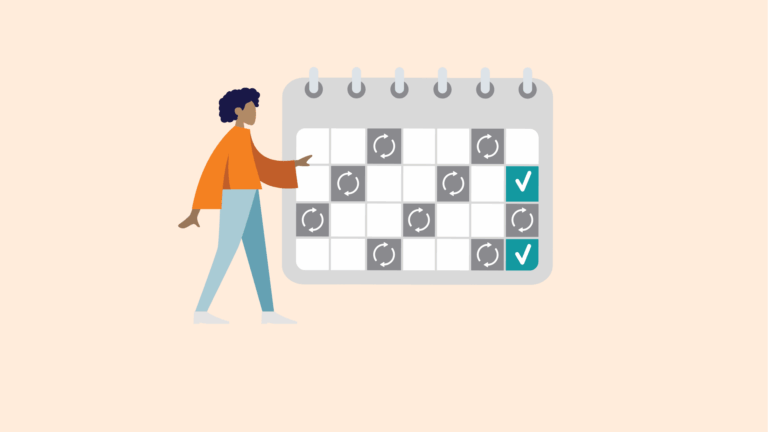
Automate the Routine

Automate recurring learning tasks, save mental energy and create space for deep learning through clearly structured, stress-relieving learning processes.

Present content

Guide the Focus

Targeted instructions, a clear structure and visual orientation can guide learners, reduce excessive demands and focus attention.

Promote application

Small Steps, Big Change

Small, continuous learning steps can strengthen motivation, make progress visible and enable sustainable development.

Present content

Learn by teaching

Teaching others promotes deep understanding: learners actively explain content, restructure knowledge and deepen their understanding sustainably.

Support motivation

Hook & Hold

Targeted motivation keeps learners in the process: surprising introductions, personal relevance and a tangible sense of achievement ensure sustained attention and commitment.

Present content

Build on What's There

Building on previous knowledge facilitates new learning: learners activate existing schemata, link new content to them and feel more competent in dealing with complex topics.

Promote application

Cognitive Apprenticeship

Making thinking visible deepens competence: learners adopt expert strategies, practise with guidance and develop independent problem-solving skills step by step.

Promote application

Learning Cycle

Kolb's learning cycle shows: Knowledge is created through experience, reflection, understanding and application - a dynamic process of experiential learning.
Space to remember

Distributed repetition strengthens the memory: regular, staggered recall consolidates knowledge in the long term and makes learning progress tangible.

Step by step

Complexity in portions makes learning accessible: small, logically sequenced units facilitate understanding and reduce cognitive overload.

Flow to Grow

Challenges in balance generate learning flow: clear goals, direct feedback and suitable tasks lead to deep concentration and self-sustaining motivation.

Get the digital version of eLearning Tactics now!

Would you like to receive our card set with practical eLearning tips as a PDF?
Simply enter your e-mail address and we will send you the PDF file directly.

We will only use your e-mail to send you the PDF and occasionally to send you further information about our services. You can unsubscribe at any time with one click.

We use Brevo as a shipping platform. By submitting the form, you consent to the processing of your data in accordance with the Brevo data protection guidelines to.

The registration could not be saved. Please try again.
Your registration was successful. Please confirm the link in the e-mail we sent you.
With the Moodle Educator Qualification you document your Moodle expertise!

Online learning with the learning management system (LMS) Moodle.

Did you use Moodle today?

Discover Moodle - the most widely used learning management system in the world. Diverse learning experiences, exciting communication, exams and much more.